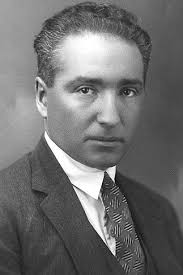
There are few figures in the history of science whose legacy is as polarising, visionary, and haunting as that of Dr. Wilhelm Reich.
To modern somatic therapists, he is the founding father of body-oriented psychology—the man who understood that trauma is not merely an abstract mental pattern, but a physical reality stored in muscle tissue. To mid-century federal regulators, he was a charlatan selling dangerous quackery. And to cultural historians, he remains one of the most tragic victims of institutional censorship in American history—a man whose books had the dubious, horrifying distinction of being burned by both Nazi Germany and the United States government.
How did one of Sigmund Freud’s most brilliant proteges go from pioneering the future of psychotherapy to dying alone in a federal prison, his life’s work consumed by fire?
To understand the tragedy of Wilhelm Reich, one must trace the arc of a man who was perpetually decades ahead of his time—and who refused to stop pushing boundaries, even when the world mobilized to destroy him.
Part I: The Mind-Body Breakthrough and "Character Armor"
Born in Austria-Hungary in 1897, Reich served as an officer in the Austrian Army during World War I before entering the University of Vienna to study medicine. It was there that he caught the eye of Sigmund Freud. Recognized for his extraordinary intellect, Reich quickly rose through the ranks of the psychoanalytic establishment, becoming the First Assistant at Freud’s Vienna Psychoanalytic Polyclinic in his mid-twenties.
At the time, traditional psychoanalysis was purely a "talking cure". Patients lay on a couch, staring at the ceiling, analyzing their dreams and verbalizing free associations. But Reich began noticing something his peers ignored: how the patient spoke was far more important than what they said.
Reich observed that emotional trauma did not just exist as abstract thoughts in the psyche; it manifested physically. A patient struggling with repressed rage didn't just express it verbally—they held their breath, clenched their jaw, elevated their shoulders, and hardened their diaphragm.
He coined the term "Character Armor" (and its physical manifestation, "Muscular Armor"). Reich posited that when a child or adult experiences emotional trauma, fear, or chronic anxiety, the body instinctively contracts to protect itself. If that emotional pain is never processed, the physical muscle contraction becomes permanent, forming a rigid shell that blocks the natural flow of life energy and emotional expression.
Trauma / Fear ──> Muscle Contraction ──> Chronic Armor ──> Emotional Numbness
Reich broke the cardinal rule of early psychoanalysis: he stepped away from the chair behind the couch, looked his patients in the eyes, and touched them. He pressed on chronically tense muscles in the neck, chest, and abdomen, guiding his patients to breathe deeply through the physical resistance. When the muscular tension gave way, decades of pent-up grief, rage, or terror would flood out of the patient.
This revolutionary approach, which Reich called Vegetotherapy (because it targeted the autonomic or vegetative nervous system), marked the birth of somatic psychology. Decades before modern neurobiology confirmed that "the body keeps the score," Reich had already mapped out how somatic holding patterns maintain psychological neuroses.
Part II: The Antifascist and the Clash with Authority
Reich was never content to keep his theories locked inside a clinical consulting room. He believed that neuroses were not merely personal failures, but the direct result of unhealthy, authoritarian, and sexually repressive societal structures.
In the late 1920s and early 1930s, working in Vienna and Berlin, Reich established sex-hygiene clinics for working-class youth, advocating for sex education, birth control, and women's reproductive autonomy.
When the shadow of National Socialism began to fall across Europe, Reich applied his psychological theories to politics. In his seminal 1933 book, The Mass Psychology of Fascism, Reich presented a terrifyingly accurate analysis of how authoritarian regimes take root. He argued that authoritarian family structures—rooted in fear, strict obedience, and the suppression of natural biological drives—create a submissive, emotionally armored population that hungers for a strongman dictator to tell them what to do.
This message angered virtually everyone in power:
* The Nazis placed Reich on a death list, forced him to flee Germany disguised as a tourist, and publicly burned copies of The Mass Psychology of Fascism.
* The Communists expelled him from the party for arguing that psychological liberation was just as important as economic revolution.
* The Psychoanalytic Establishment, terrified of political controversy and uncomfortable with Reich’s radical focus on physical bodywork, formally expelled him from the International Psychoanalytic Association in 1934.
Refusing to be silenced, Reich fled across Europe—from Denmark to Sweden to Norway—before finally accepting an invitation in 1939 to teach at the New School for Social Research in New York City. He arrived in the United States on the eve of World War II, hoping to find a free haven where his research could flourish.
Part III: The Discovery of Orgone Energy
It was during his exile in Norway and his early years in America that Reich’s research took a turn that would forever alter his life—and alienate him from mainstream science.
While studying microscopic, single-celled organisms, Reich claimed to observe microscopic, glowing blue vesicles formed from the disintegration of organic matter, which he called "bions". Through these experiments, Reich concluded that he had uncovered a fundamental, non-electromagnetic biological life force that permeates all living organisms, the atmosphere, and space itself.
He named this energy Orgone (derived from organism and orgasm).
Reich believed that physical and emotional health depended entirely on the free flow and charge of orgone energy within the body. When orgone energy became stagnant or blocked by physical body armor, illness—including cancer—would manifest.
To harness this force, Reich designed the Orgone Energy Accumulator. These were human-sized, box-like structures constructed with alternating layers of organic materials (which he claimed absorbed orgone) and inorganic metal (which reflected it). Reich asserted that sitting inside an accumulator concentrated orgone energy, boosting the body’s natural immune response, charging the tissues, and helping dissolve chronic armor.
Outer Organic Layers (Absorb Orgone) ──> Inner Metal Layers (Reflect Orgone) ──> Concentrated Life Force
Reich moved his headquarters to a picturesque 175-acre property in Rangeley, Maine, which he named Orgonon. There, he built laboratories, an observatory, and manufacturing facilities, attracting a dedicated community of physicians, scientists, and supporters who believed he had uncovered the primordial mechanism of life.
Part IV: The Cloudbuster, UFOs, and the Cold War Panic
As the 1950s began, Reich’s research ventured into realms that alarmed the Cold War American establishment.
Believing that orgone energy regulated atmospheric patterns, Reich constructed the "Cloudbuster"—an array of long, hollow metal pipes connected to flexible hoses submerged in running water. Reich claimed that by grounding atmospheric energy, the device could manipulate weather patterns, dissolve stagnant clouds, and bring rain to drought-stricken regions. In 1953, local blueberry farmers in Maine famously offered testimony that Reich’s cloudbuster had saved their crops by triggering rain during a severe regional drought.
At the same time, Reich became deeply concerned with what he termed "DOR" (Deadly Orgone Radiation)—a toxic, stale form of energy that he believed was produced by nuclear testing, industrial pollution, and human hostility. During research expeditions in the Arizona desert, Reich claimed that DOR was causing global desertification and even alleged that he was observing and interacting with unidentified flying objects (UFOs) that were altering Earth's atmosphere.
To his devoted followers, Reich was pushing the absolute frontier of natural philosophy. But to the United States government during the height of the Red Scare, a foreign-born scientist running an isolated compound in Maine—claiming he possessed technology that could manipulate the weather and alter nuclear radiation—was a dangerous wildcard.
Part V: The FDA, the Trial, and the Ashes of Orgonon
The campaign to destroy Wilhelm Reich did not begin in a scientific forum, but in the popular press. In 1947, a series of scathing articles in The New Republic and Harper's painted Reich as a dangerous lunatic running a "sex-box cult."
Prompted by the media uproar, the Food and Drug Administration (FDA) launched a massive, years-long investigation into Reich. The FDA concluded that orgone energy did not exist and declared the Orgone Energy Accumulator a "fraud of the first magnitude".
In 1954, the U.S. government obtained a sweeping federal injunction banning the interstate shipment of orgone accumulators and all literature mentioning orgone energy.
Reich’s response was characteristic of his lifelong defiance. He refused to appear in court to defend himself, sending a letter to the judge arguing that a court of law was fundamentally unqualified to evaluate scientific research:
> "Scientific matters cannot be discussed in court... Science cannot be ordered by injunction, nor can scientific truth be established by legal decree."
>
By refusing to recognize the court's jurisdiction, Reich was found guilty of criminal contempt. In May 1956, he was sentenced to two years in federal prison.
What followed remains one of the most chilling chapters of state-sanctioned censorship in modern American history:
* Destruction of Equipment: FDA agents arrived at Orgonon in Rangeley, Maine, with axes and sledgehammers, smashing Reich’s orgone accumulators and laboratory equipment.
* The First Book Burning (Maine): On June 5, 1956, federal agents supervised the burning of hundreds of Reich’s books and research journals at Orgonon.
* The Second Book Burning (New York): On August 23, 1956, FDA officials loaded over six tons of Reich’s published works—including copies of Character Analysis, The Function of Orgasm, and even The Mass Psychology of Fascism—into a garbage truck and hauled them to the Gansevoort Incinerator in New York City, where they were reduced to ash.
1954: Federal Injunction ──> 1956: Contempt Conviction ──> 6 Tons of Books Burned ──> Imprisonment
The irony was horrific. The very same book, The Mass Psychology of Fascism, which had been burned by Adolf Hitler’s Nazi regime in the 1930s for being too radical, was incinerated by the United States government in 1956 under the guise of medical regulation.
Part VI: Death in Lewisburg and an Enduring Legacy
In March 1957, Wilhelm Reich was incarcerated at the Lewisburg Federal Penitentiary in Pennsylvania. Broken in spirit, isolated from his work, and suffering from rapidly deteriorating health, the once-indomitable scientist spent his final months writing in his cell.
On November 3, 1957—just days before he was scheduled to be considered for parole—Wilhelm Reich was found dead in his prison cell. The official cause of death was heart failure. He was 60 years old.
He was buried at his beloved Orgonon in Maine, under a stone bearing an epitaph he had chosen himself: Wilhelm Reich, Born March 24, 1897 – Died November 3, 1957.
The Rebirth of Reich's Ideas
While the federal government attempted to erase Wilhelm Reich from history, his ideas proved impossible to burn.
Today, mainstream psychology and medicine have quietly validated many of the core somatic principles that Reich was persecuted for articulating nearly a century ago:
| Reichian Concept (1930s) | Modern Scientific Equivalent |
|---|---|
| Muscular Armor | Somatic trauma storage, chronic muscular guarding, hyperarousal. |
| Vegetotherapy | Polyvagal Theory, Somatic Experiencing (Peter Levine), The Body Keeps the Score (Bessel van der Kolk). |
| Character Structure | Bioenergetic Analysis (Alexander Lowen), Gestalt Therapy, Ego Psychology. |
| Mind-Body Unity | Psychoneuroimmunology (the link between chronic stress, autonomic nervous function, and physical disease). |
Wilhelm Reich was an imperfect genius—a man whose unyielding conviction led him to monumental scientific breakthroughs, but whose refusal to compromise ultimately led him into tragedy. Whether one views his late work on orgone energy as visionary natural philosophy or tragic overreach, his early contributions to human freedom, body-oriented psychology, and trauma therapy remain monumental.
Reich once wrote: "Love, work, and knowledge are the well-springs of our life. They should also govern it." Though his body was broken by imprisonment and his writings were reduced to ashes, those well-springs continue to flow through every modern therapeutic room where a patient learns to breathe, feel, and embody their truth once again.